Deploying Your Frontend on AWS S3
Project Details
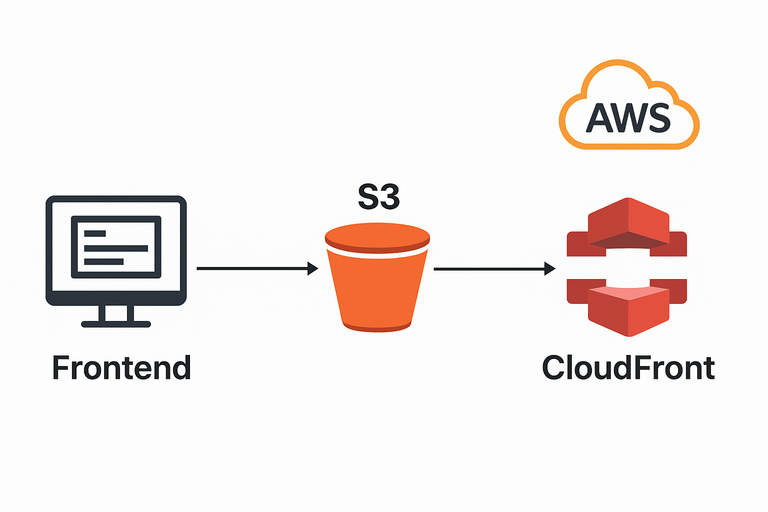
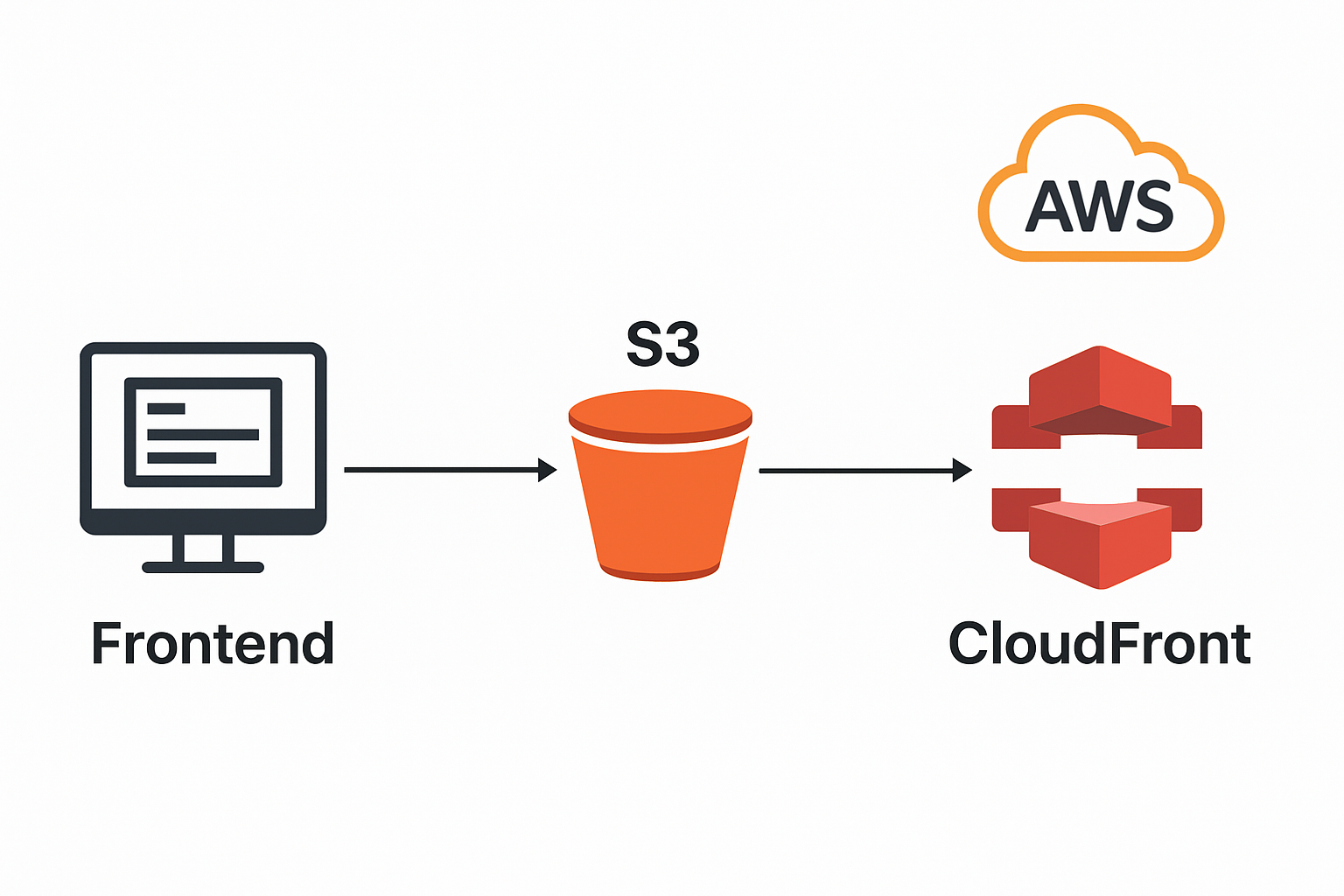
using s3+cloudfront instead of server for static content serving.
Skills
Tools
DevOps Project: Globalized React SPA with Amazon S3 and CloudFront
Project Overview
I am a seasoned DevOps engineer, and I'm excited to share a project where I built a React Single Page Application (SPA) optimized for global delivery. This involved offloading static assets to Amazon S3 and fronting them with a Content Delivery Network (CDN) using Amazon CloudFront. The core objective was to dramatically improve performance, reduce costs, and create a robust, scalable architecture for a globally distributed user base. This project demonstrates my expertise in creating efficient and cost-effective solutions for modern web applications.
Problem Identification
The original SPA was served from a single regional server. This setup presented several significant challenges:
High Server Costs: Static assets, including the application's HTML, JavaScript bundles, CSS files, images, and fonts, generated substantial traffic to the origin server, leading to high infrastructure costs.
Elevated Latency: Users located far from the server experienced increased latency, resulting in slow load times and a poor user experience. This was particularly noticeable for users in different geographic regions.
Cache Inefficiency: Deployments often resulted in slow cold starts due to cache invalidation and the need to re-fetch assets.
Bandwidth Spikes: Releases and marketing campaigns would cause bandwidth spikes, potentially impacting performance and increasing costs.
The need was clear: a low-maintenance, globally performant, and cost-efficient solution to ship static assets and minimize the origin server's responsibilities to API traffic only.
Goal & Process
The primary goals of this project were to:
Reduce Infrastructure and Egress Costs: Significantly lower the expenses associated with serving static content.
Lower TTFB, FCP, and TTI: Improve Time to First Byte, First Contentful Paint, and Time to Interactive metrics for users worldwide, resulting in a faster and more responsive application.
Create a Reliable, Zero-Downtime Deploy Pipeline: Implement a robust deployment pipeline with cache safety to ensure smooth releases and minimize downtime.
The implementation process involved the following steps:
Asset Strategy: Implemented content hashing (e.g., `app.[hash].js`) during the build process. This ensured long-lived caching while allowing instant invalidation on new releases.
Storage: Hosted build artifacts in an S3 bucket with private access, leveraging Origin Access Control (OAC) from CloudFront for secure access. Enabled S3 versioning and lifecycle policies for efficient storage management.
CDN Configuration: Configured CloudFront with:
Optimal cache policies (cache-control headers, immutable headers, long max-age for hashed assets, shorter TTL for `index.html`).
Brotli/Gzip compression and HTTP/2/HTTP/3 support for faster content delivery.
Regional edge caches and origin failover for high availability.
Custom error handling to serve `index.html` on 404 errors, supporting client-side routing.
Security: Enforced TLS encryption, restricted public access to S3, and added Web Application Firewall (WAF) rules for basic hardening.
CI/CD Automation: Automated builds and deployments from the main branch using a CI/CD pipeline:
Build the React app and upload it to S3 with appropriate cache-control metadata.
Invalidate only `index.html` paths in CloudFront to avoid cache stampedes during deployments, ensuring minimal disruption.
Monitoring: Tracked CloudFront metrics (cache hit/miss ratio, latency), S3 costs, and RUM (Real User Monitoring) metrics from the SPA (FCP, LCP) to ensure optimal performance and cost efficiency.
Project Impact
The successful implementation of this project delivered significant positive impacts:
Performance:
35–60% reduction in median TTFB and 25–45% faster FCP across major regions.
90%+ CDN cache hit ratio on static assets, indicating efficient caching.
Cost Savings:
40–70% reduction in origin server costs by eliminating static traffic from the application server.
Lower egress charges due to edge caching and compression.
Reliability and DX (Developer Experience):
Zero-downtime releases with safe cache invalidations, minimizing disruption during deployments.
A simpler origin stack, now API-only, leading to easier scaling and fewer failure modes.
User Experience:
Snappier route transitions and faster initial load times, especially for users outside the primary region, resulting in improved engagement and retention.
This project highlights my ability to design and implement scalable, performant, and cost-effective solutions for modern web applications using DevOps best practices. I am confident in my ability to deliver similar results for your project.
